

To Behold Beauty
A reflection on the experience of guiding a student through their first experience of watching a sunset. As well as a few thoughts on faithful witnessing to Jesus in a post-Christian country.

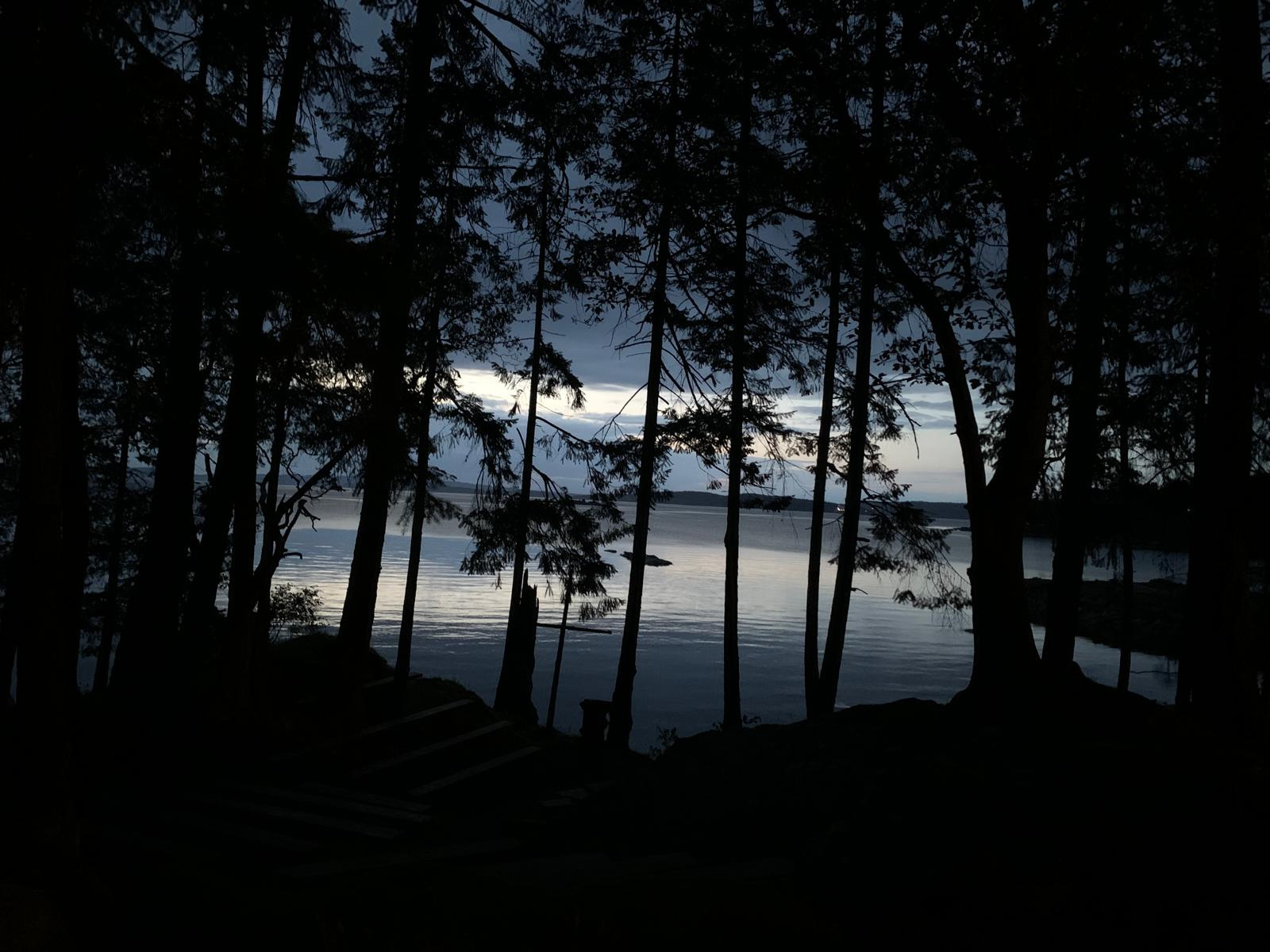
“This is my first sunset. What do I do?”
The question initially surprised me. What a thoroughly theological inquiry from a student who was not a follower of Christ. But it wasn’t the nature of this student’s religious beliefs that astonished me. It was the recognition that it was a question that I had never heard another Jesus follower ask. I had never asked the question.
What am I doing when I look at a sunset? What are you doing when you look at a sunset?
Sitting on the rocks at Pilkey Point on Thetis Island, I fumbled as I stumbled around attempting to turn my interior weavings of wonderings into something I could communicate.
Drawing upon and stealing from a different but perhaps familiar context, I asked the student, “Well, sometimes when looking at something beautiful, it is good to just listen for what the beautiful thing or art piece is inspiring in you. What do you feel as you watch the sunset?
“I don’t feel anything.”
Earlier in my years in campus ministry, this question would have frustrated me. But by now it was more than a common response. But before I could respond, the student continued speaking.
“I sat down next to you, because I’ve never watched a sunset and I don’t know what to do. I looked, and I saw you, and I thought, ‘that’s who could teach me how to watch a sunset.’”
When someone says something like this to you, one must recognise that they are stepping into holy time. There on those rocks, in that moment, I knew we had entered into such a sacred place. All that was for me to do was to listen to the Spirit and respond.
“Sometimes when people look at art,” I started up again, drawing upon the art world to speak to the golden dusk world of sunsets in front of us, “they feel they need to respond in a particular way. But I think it’s better to interact with something beautiful by listening. Listen to what comes up in us. Perhaps it’s a feeling. Perhaps a thought. Perhaps a question. Perhaps a prayer. I sometimes like using the word evoke - what does the beauty evoke - but that might be too much of a word for here. So what does the sunset inspire in you?”
“Volcanoes.”
“Say that again,” I asked. He had spoken too quietly, but I could hear the growing excitement already.”
“Volcanoes,” he said louder. “I’m thinking of volcanoes. It’s like the sunset is the magna settling down.”
What a thought. What an incredible insight. In a smattering of minutes, this student had gone from having no response to a sunset to stating an incredible poetic statement with far too many ramifications than I had time to consider.
“What is it that you feel when you watch a sunset?”
“Well, sometimes I feel sad. Because it feels like the end of a day. But then, finishings and completions are also something to be thankful for and be joyful about. So sometimes I watch a sunset or walk around me neighborhood in dusk, and all I can do is express my thankfulness to Jesus. That’s, after all, often what watching beautiful things does for me. It brings me into conversation with God.
The student nodded and turned to ask me another question. As he shared about how much pressure he had felt to have the “right” experience of a sunset, rather than simply accept and listen to what his experience was revealing, you could hear something freeing inside him. In that freedom, and from the place of growing trust, the conversation turned to one about different religious purposes for meditation, and I began describing one of my most common evening habits of being with God. A habit drawn upon ancient contemplative traditions.
Halfway through my description, my teaching turned to guiding as I noticed that the student had closed his eyes. He was imagining what I was describing: A large tree on a great lake. With leaves flourishing on all the branches. One by one, leaves fall and drop on the water. And the water takes them away into the place where God is. This is what I describe: my hands inviting him to enter into the imagination as he looked at the great body of water before us.
Another student, who had been listening, sat down on the other side of me and asked if I could begin again. So I did, this time slowing down my words much more. Providing more space for the students to let the Creator work through their imagination. As I guided them, I prayed to Christ, asking him to reveal himself in this moment. It was only after that that I saw that a third student had joined us and had been listening the whole time.
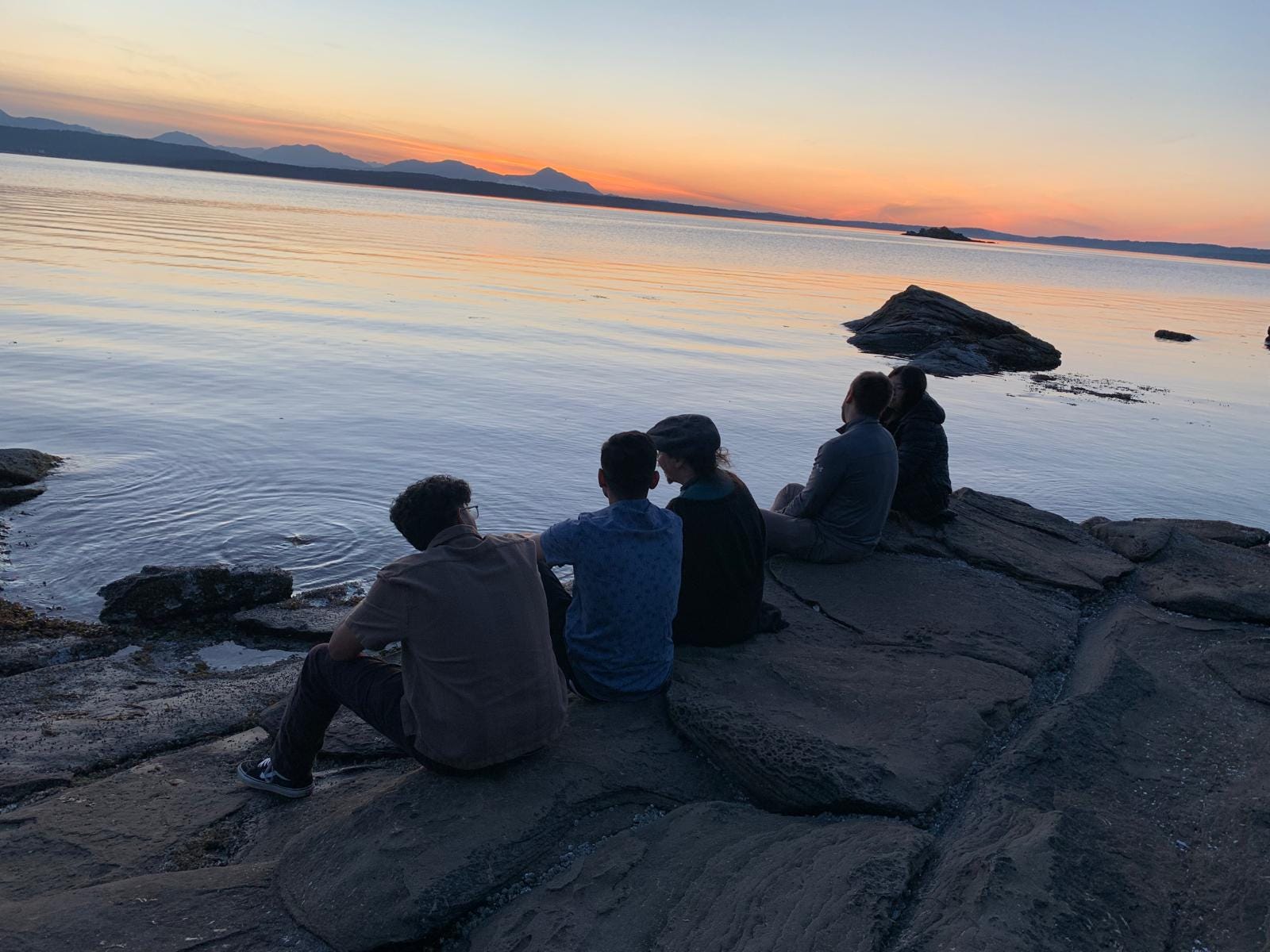
As I finished, the first student, with growing awe, his face came alive, looked at me and said, “I imagined a tree on an island, and as its leaves fell to the water, I imagined surrendering my worries or other things I wanted to let go. And then I saw something beautiful. I saw a white flower unfurl and blossom on the tree.”
“What a gift from God,” I whispered honestly. I smiled as I thought about the significance of what this student had experienced. He came from a religious tradition that was rooted in forms of meditation that were designed to empty one of distractions and desires. But here he was, following the tradition of Christ, where I think Christ was speaking to him through his thoughts and filling his imagination with symbols and imagery of himself. It felt like watching a bit of new creation unfold in our present.
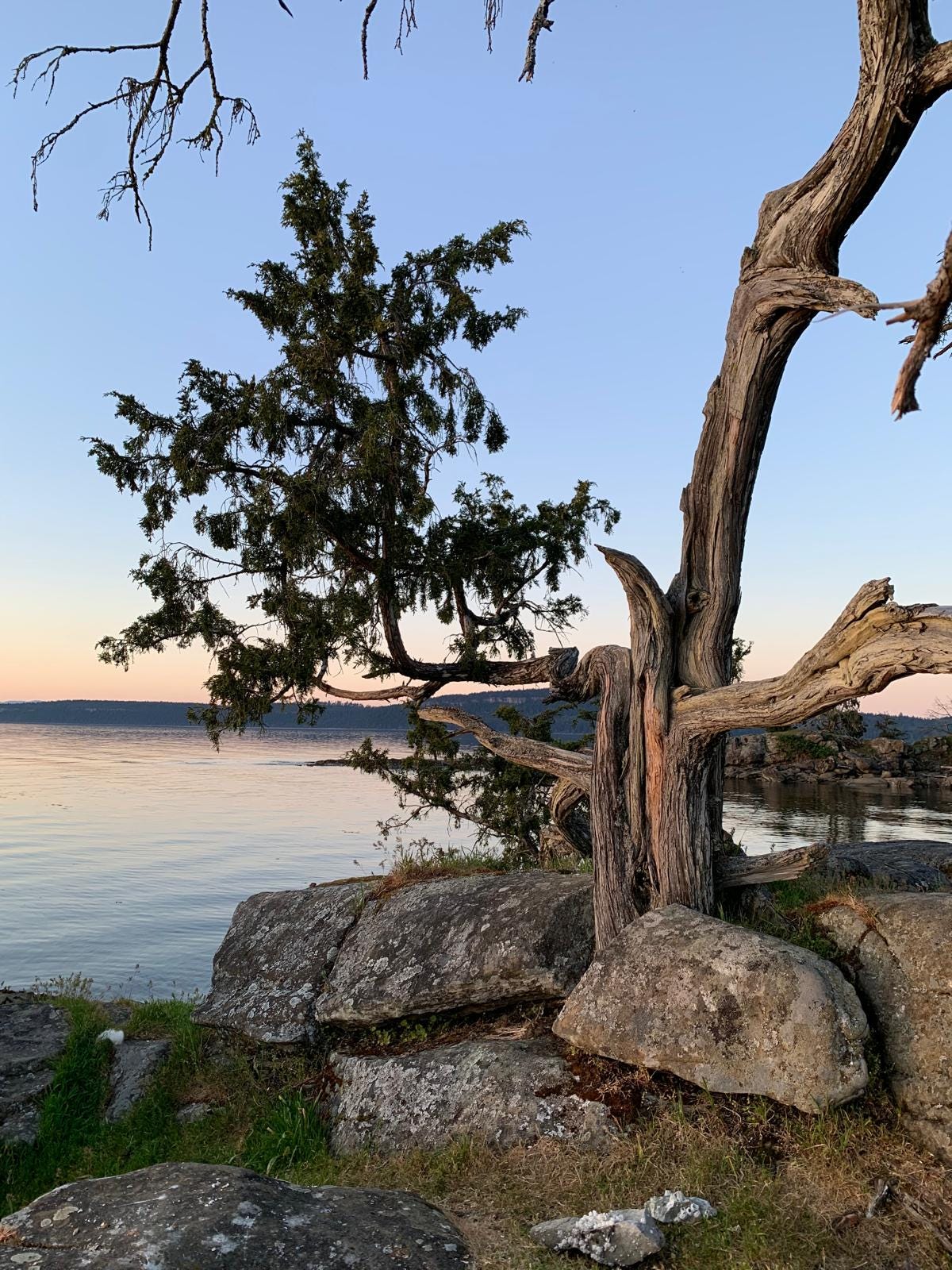
Over the next twenty-four hours, this conversation would lead to this student inviting me to fast along with him. Again, so that we might share and learn from the different ways we practice our faiths. For this student, fasting was a way to focus on connecting with other people. For me, it was a place to encounter God and have my desires and hungers redirect me towards God and his people. This is what good interfaith dialogue can look like.
Our fasting would culminate in our small community of students, nearly all not yet followers of Jesus, choosing to remain and pray on behalf of one of our community’s friends in Gaza with her children. As a good mentor once shared with me, it is better to welcome those who do not follow Jesus to come and observe our prayer life or to try praying on their own, rather than to ask if we can pray for them.
As I prayed, my stomach could be heard grumbling by all, and as I closed our time of intercession, I found the words to pray, “I am hungry from fasting all day, Jesus. I just want to get to dinner. But perhaps you are teaching me just a little of how to share in the suffering of our friend in Gaza, whose hunger will not be so quickly filled tonight. But Jesus, you are a God of abundance, and you can do miracles. So would you provide? Would you help us provide?” As I closed the prayer, I recognised how the Spirit had been weaving our reading of Kim’s Convenience and examination of followers of Jesus who have chosen to live with and experience the suffering of those they are called to serve.
From learning to do a sunset right, to witnessing through Christian practices of fasting and meditation, to intercession for our friends in Gaza. All this in the span of twenty-four hours.
Do you notice how this kind of witnessing combines right feeling with right thinking with right acting? It’s all there. Every part of our conversation, our observing of the world, our questions became woven together into a small space and time where God could reveal himself.
It's a dream and it's a bit of a dance
A bit of a posture, it's a bit of a stance
- Satisfied, Hamilton
Angelica Schuyler might be singing about romantic love, but her words illustrate something significant about evangelism in a post-Christian country.
Witnessing in a post-Christian country cannot be done without dreaming. Postmodern witnessing must involve inviting others to enter into God’s imagination for what the world is and what it could be if fully restored. This requires our imaginations to be saturated by God’s delight for the beautiful. This was the space that this student’s question about how to watch had opened up for me.
His tradition and his life so far had given him nothing to translate a sunset for him. It was just a sunset. Something he knew was beautiful, but had no idea what to do with that beauty. Like so many in a world limited to its material forms, the sunset had become a silent thing. Not even a clock any more. But oceans and sunsets and the natural world can be read. They have chapters. They have stories. They have poetry. They contain words. How could they not? Anything that is a world has words.
Postmodern evangelism is also a dance. Discipleship in the way of Jesus has always been a dance. Refusing to be limited to strict rules and procedures and rituals and structures and leaders. Like dance, it has all these, and one must learn our steps, but it is greater and more organic than all these things. Sadly, many of us want to learn evangelism and discipleship like we order takeout at a fast food restaurant. But if evangelism in our context requires us to grow excellent at creating and engaging in beauty and meaning-making, then we will need to learn to dance. We will need to learn to disciple like one sculpting stone. We will need to listen to our land and our friends like they are books.
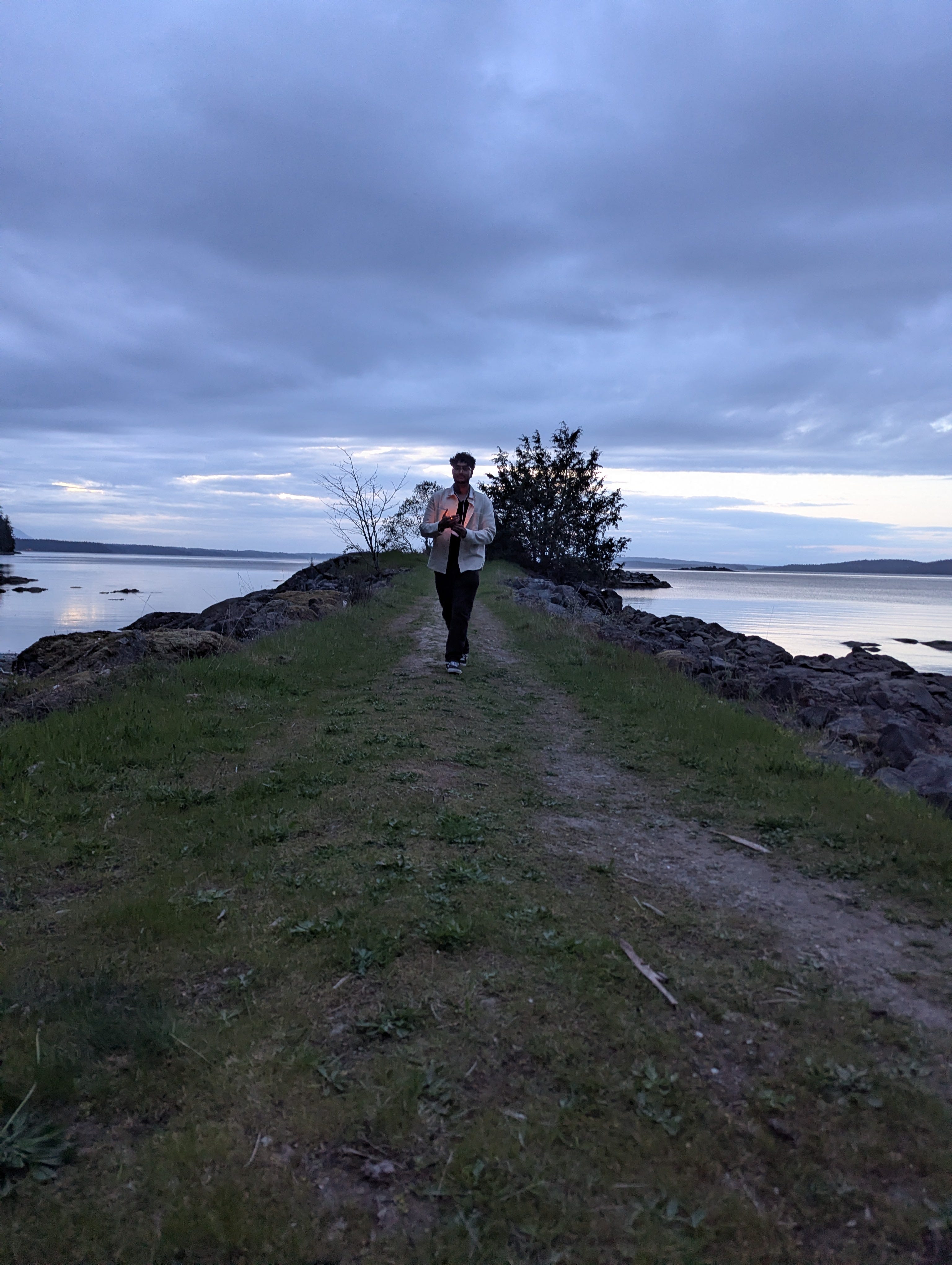
A day after this dialogue at dusk, I would hear of another student who would have a very different engagement with beauty. I had left an unnamed poem in one of the student classrooms earlier in the week as a bit of a parable. An act of culture care. The poem had, in typical parable fashion, unearthed quite a bit of confusion and more. One student in particular had been quite frustrated by my short piece:
five thousand gardens
     like the image of the sun
who is king may stumble
     who is just may look just
Consider the Cloud,
     what river is true
no lily shadow,
     But the penny dropped
For this student, what I had written was not a poem. A riddle, but not a poem. I didn’t have a chance to follow up with him, but from those who shared his thoughts with me, he sounded adamant and annoyed that what I had written was not a poem. It didn’t have rhyme or enough of the components of a poem. The most he could understand it to be was to call it a riddle.
My poem is a riddle. But it is also a thing of beauty. With a touch of ugliness to wrestle through. Perhaps one day I will get to ask this student about his experience of the poem so that I might understand his frustrations.
I share this student’s response, though, not to critique him, but to tell a parable through him. Let me interpret my parable:
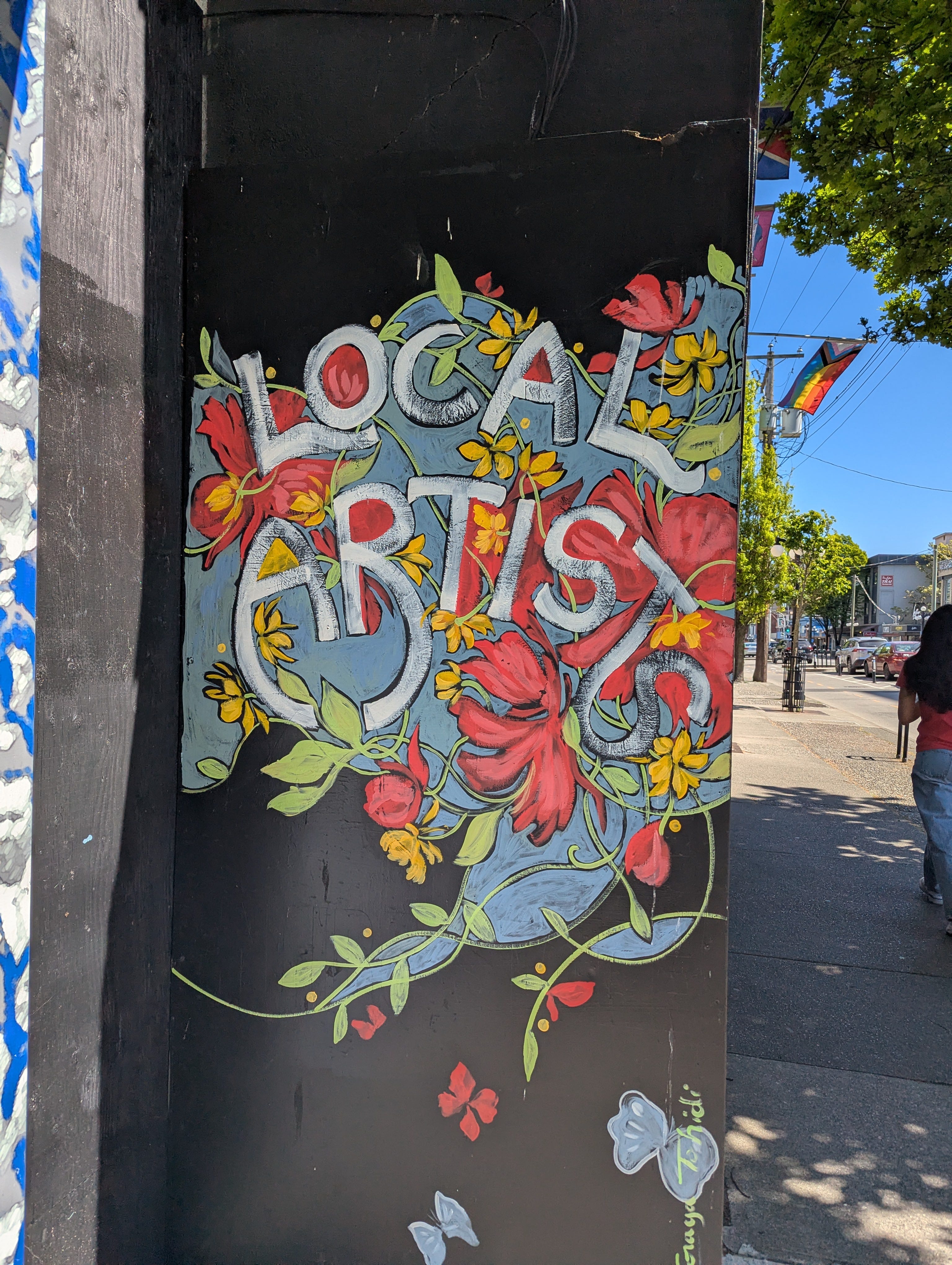
Many followers of Jesus posture themselves towards Christian practices of evangelism, compassionate care, hospitality and discipleship in such a way that when they actually witness these beautiful parts of our faith, they are blind to their forms. They are looking for only a riddle, and so when the Kingdom of God comes in a form much more beautiful and more vast than just a riddle, they do not see it. When one describes to them the poetry they are being invited to, they get scared. Or angry. So they do what we all do when faced with something too beautiful. We settle for confining ourselves to a fenced and safe Eden when we are called to a wild garden with rivers of life spreading out throughout the whole cosmos of creation. Beauty is concerned with cosmos, even when it looks like the smallest shrub in a forest that remains unnamed.
We are living in an era where so many feel exhausted by chaos and the unending choices open to them. The temptation can be to give people the riddle they want, rather than teach that poetry does indeed come in many forms that do different things. No, it is not partial gospels and box-set visions of the Kingdom of God that will call an anxious world out of the chaos they are asking to be delivered from. It is Christ, the Creator of all things, who we must abide and have the ground of our being centred in.
So, let us learn to disciple as a painter works upon a canvas. Let us pray like a dancer learns to move. Let us witness in the power of the Spirit, like a writer pulls experiences and images together to cultivate a story so beautiful and captivating that one’s imagination and desires become formed by it. Yes, I think that is it. To begin to see evangelism as a school of formation.